
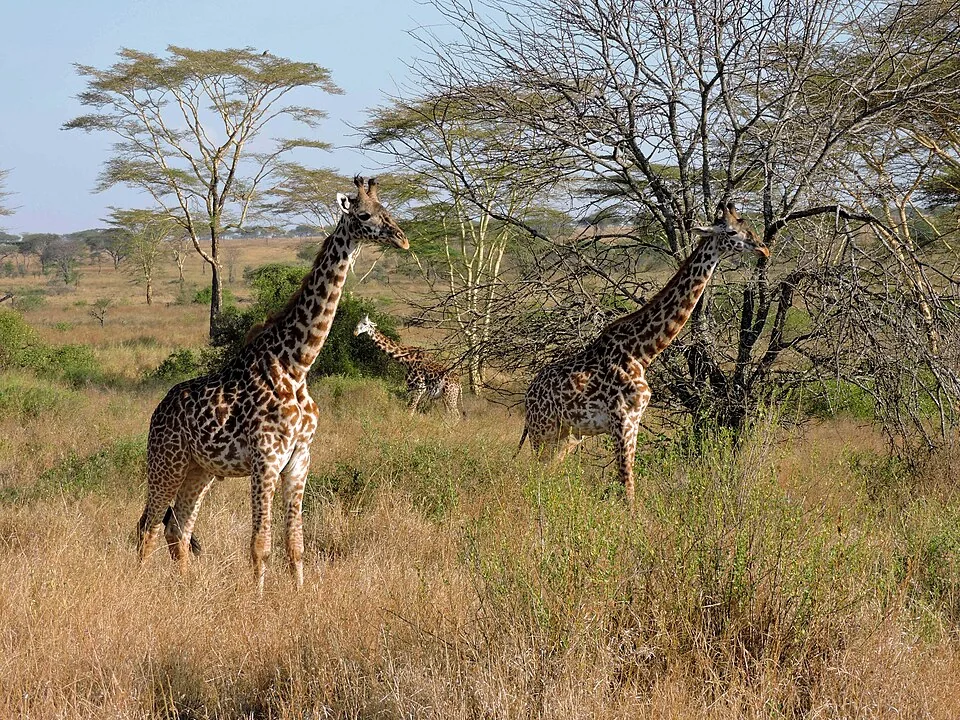

Serengeti is too large for one lodge to put every wildlife experience within easy reach. Its short-grass plains, river valleys, rocky kopjes and northern woodlands support different kinds of watching. The migration moves through a larger ecosystem that also reaches into Ngorongoro and Kenya. Start by choosing the landscape or wildlife behaviour you most want to see, then choose the camp.
Four areas that offer different days
Seronera in the centre gives access to riverine habitat and open plains. It is a practical choice for a first safari with varied game drives. In the south, the short-grass country around the Naabi Hill approach and toward Ndutu is associated with calving when fresh grazing is available. Ndutu spans the wider ecosystem, so check exactly which authority covers your accommodation and the proposed drives.
The western corridor follows the Grumeti country. In the north, Kogatende is a base for exploring the Mara River area. These names describe different parts of a very large park. Before accepting a “migration safari,” ask for a map showing your bed, your driving area and the airstrip or entrance you will use.
Timing the migration without losing the rest of the safari
Calving often draws interest early in the year. Northern river viewing commonly features later in the dry season. Rain changes the timing and direction of the herds. Even when wildebeest reach a river, a crossing can be over in minutes or fail to happen during your stay. Agree how much of a day your group wants to spend waiting. Kopjes, resident grazers and birds make worthwhile alternatives.
Arriving and deciding how long to stay
The overland approach from Ngorongoro gives a sense of scale as you enter the plains. A flight to a regional airstrip saves road time, particularly in the north, provided your camp collects from that strip. Two nights in one area allow a full day without moving luggage. Add nights before adding a distant second camp if wildlife observation is the main purpose.
What belongs in the quote
Check park entry, concession or camping fees, transfer from the correct airstrip, vehicle sharing and meal stops. Ask about luggage limits if flying and about the length of each transfer if travelling by road. The most informative detail is often the location of the first morning drive: it shows how much of your time will be spent reaching the wildlife habitat you came for.
How to compare a northern and a central camp
If one proposal names Seronera and another names Kogatende, first mark your arrival and departure on the map. A central camp can supply varied drives close to base. A northern camp can place you closer to a river watch but also farther from an overland exit via Naabi. Ask each operator to sketch one full day from breakfast to the return drive, including where lunch would be taken. The sketches make the difference tangible.
Visitor information and sources
- Tanzania National Parks on the great migration
- UNESCO’s Serengeti landscape profile
- Tanzania National Parks’ Serengeti map and visitor guide