
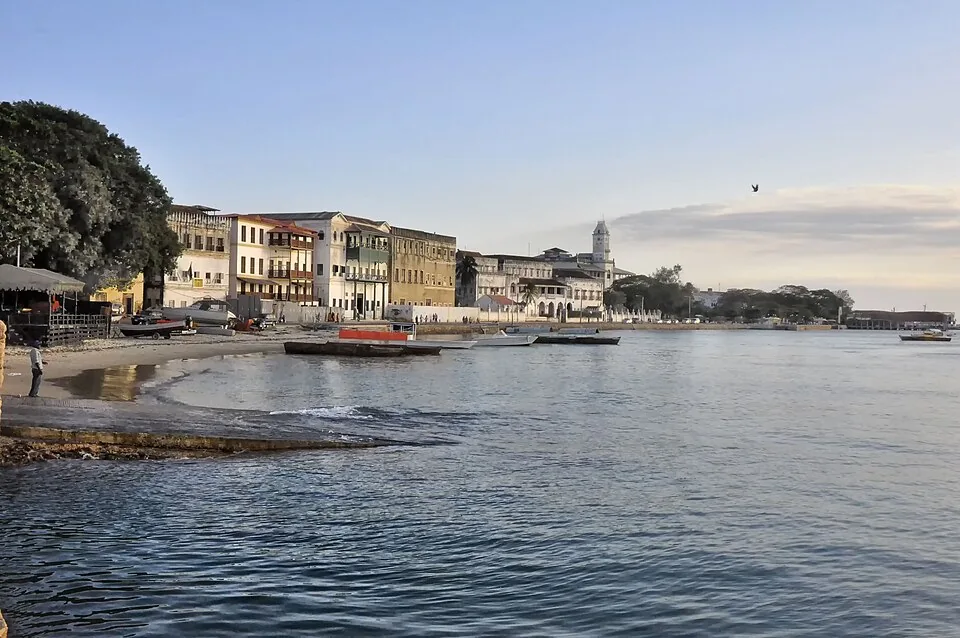

Stone Town occupies the western shore of Unguja, Zanzibar’s main island. Its lanes bring market stalls, mosques, family homes, grand merchant buildings and the working waterfront close together. Built largely from coral stone, lime and timber, this Swahili town grew through centuries of Indian Ocean exchange. Its history includes both commercial prosperity and the trafficking and enslavement of people.
Morning at Darajani and the former slave market
Start on the Darajani side if you want to see provisions arriving and the town shopping for the day. Move from the market toward the former slave market at Mkunazini, where the Anglican cathedral and exhibition give historical context to a visit. Allow enough time to read and listen. This is a substantial historical stop in its own right. Ask the guide to explain how the trade connected the mainland, the islands and overseas ports.
Reading the lanes on the way to the sea
Walk toward the Old Fort and the waterfront. Look at a doorway from across the lane before approaching it: its proportions, carving and the building above it give different clues about the house. Some elaborate doors still open onto private homes. A guided walk can also explain the shaded stone benches built along façades and how they make room for conversation in narrow streets.
Forodhani at two times of day
In daylight, Forodhani Gardens is a useful place to understand the relationship between the waterfront, the fort and the old town behind it. Return in the evening for the food stalls if that interests you. Choose a stall, ask what the price covers and watch your order being prepared. Check opening arrangements separately for any indoor monument you want to visit. Being able to see a landmark from the promenade does not establish access inside.
How much walking to plan
Give the town half a day for one considered walk and longer if you want museum time and an evening meal. Vehicles usually meet visitors at the edge of the narrow lanes. Agree on a named pickup point, wear shoes suitable for uneven paving, and ask about steps before booking an upstairs visit. For a quieter second morning, revisit one street early instead of trying to repeat the entire circuit.
An easier walk for a mixed-mobility group
Use the waterfront around Forodhani as a meeting point, then choose one inland destination at a time. Ask the guide to identify a return street with fewer steps and a shaded pause before setting off. The narrow lanes make a vehicle pickup at an arbitrary doorway difficult. If part of the group continues to Darajani, agree which waterfront landmark everyone can recognise on the way back.