
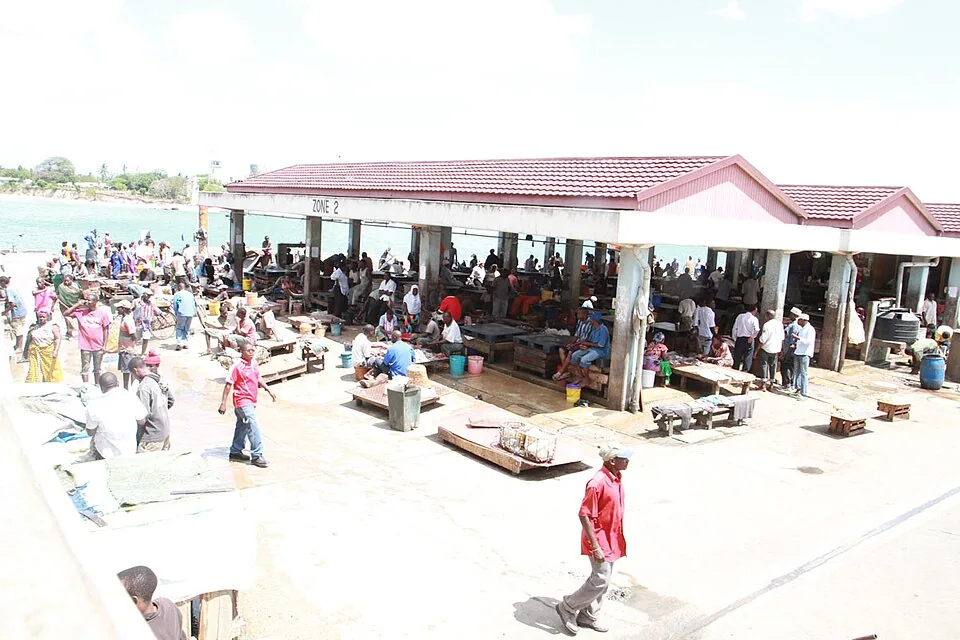

Dar es Salaam’s best-known fish market stands on the Kivukoni waterfront by the Kigamboni ferry landing. You may also hear the area called Magogoni. Its interest lies in the short distance between different parts of the fishing economy: a boat brings in its catch, a buyer bids for a lot, and nearby traders prepare fish for sale or cooking.
Follow one catch through the market
Start on the edge of the landing area and watch how crews pass baskets ashore. At the auction, look for the person presenting a lot, then watch the buyers rather than trying to follow every call. The size and type of fish in one lot help explain why a restaurant buyer wants something different from a household shopper. Move on to the retail stalls to see how a mixed catch becomes portions for different customers.
When to come and how to find it
Early morning offers a better chance of seeing the landing and auction. Boats, weather and trade determine the pace; there is no single performance time. Tell a driver “Kivukoni Fish Market, by the ferry on the city side” and establish a pickup point away from the busiest loading space. There is no need to cross to Kigamboni to visit this market.
An hour here, then a different view of Dar
Allow roughly an hour if your main interest is observing the market. With a local guide, use part of that time for the auction and part for a conversation at a stall when the seller is free. Continue to the National Museum and House of Culture if you want a second stop within the central waterfront area. A ferry crossing is a separate outing and needs its own return plan.
Photos, purchases and access
The floor can be wet and busy with baskets. Wear shoes with grip and stay clear of the line from boat to auction. Ask the individual before photographing a face or a transaction. If you order cooked fish, establish the portion, accompaniments, price and where you will eat before it is prepared. If crowded standing areas are difficult, ask a guide for an outer-edge viewpoint and keep the visit short.
Words to know at a fish stall
Samaki means fish in Swahili, bei means price and asante means thank you. Asking “Bei gani?” opens a conversation about price. Point to the particular fish or portion you mean and confirm whether the figure is for one fish, a heap or a prepared plate. At an active auction, save these questions for the retail area where a seller has time to answer. Auctions move quickly and people may assume a gesture is part of the bidding.
Visitor information and sources
- National Museum of Tanzania’s visitor magazine on Kivukoni
- Kivukoni waterfront location and visitor information